On your recent vacation to Las Vegas or on your night out at The Borgata you finally hit the big jackpot that you’ve been waiting for! Now what are the tax implications? Gambling income can come from various sources such as lotteries, casinos, raffles, bingo, etc. Your gambling income includes cash winnings as well as the fair market value of prizes.
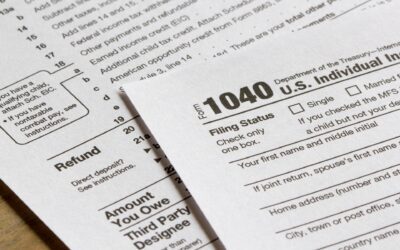
The IRS requires that all gambling winnings be reported on your individual tax return and treated as “ordinary income.” All gambling winnings are reported on your Form 1040, Line 21 (Other Income) unless you are a professional gambler (then your gambling winnings and losses are on reported on Schedule C). Depending on the amount of your winnings, you may receive one or more Forms W-2G, which report the amount of your winnings as well as the amount of tax that was withheld, if any. You will need these forms to prepare your individual tax return.
The IRS advises that it is important to keep an accurate record of gambling winnings and losses. As a non-professional gambler you can deduct gambling losses to the extent of gambling winnings only if you itemize your deductions on Form 1040, Schedule A (Itemized Deductions). Losses are an “Other Miscellaneous Deduction” (Line 28) that is not subject to the 2% limit. The IRS requires that to deduct your losses you must be able to provide receipts, tickets, statements, or other records that show the amount of both your winnings and losses. If you have a player’s card for example, the casino can keep track of your gambling wins and losses as well as provide a statement that can be used to help substantiate losses. Although casino letters that “rate” gambling activity or “estimate” losses may be part of the taxpayer’s proof of losses, they are not acceptable alone as evidence f gambling losses. All gambling income is offset by all gambling losses. For example casino blackjack losses will offset lottery winnings.
The IRS requires that payers withhold federal income tax from the winnings if the winnings minus the wager exceed $5,000 and are at least 300 times the wager. Withholding is prepayment of the taxes expected to be due on the winnings. Generally withholding is 25% of the proceeds (the winnings minus the wager). However the payer may be required to withhold 28% of gambling winnings. This is referred to as backup withholding. Backup withholding is necessary if the winner does not furnish a correct taxpayer identification number (TIN), 25% has not been withheld, and the winnings are at least:
- $600 and at least 300 times the wager
- $1,200 from bingo or slot machines
- $1,500 from keno
- more than $5,000 from a poker tournament
These withholdings are reported on form W-2G.
New Jersey also taxes gambling income. Net gambling income, income less losses for the year, is reported on a separate line of the NJ Form 1040. However, New Jersey doesn’t tax the first $10,000 of New Jersey lottery wins. For example, if you win 2 New Jersey lotteries of $7500 each during the year, none of it will be taxed in New Jersey. State legislation requires the withholding rate of 3% on New Jersey lottery winnings on payments over $10,000 made both to New Jersey residents and nonresidents. The 3% NJ withholding rate also applies to gambling income whenever federal tax is required to be withheld.